How Corrosion Affects Gas Pipes
Corrosion eats gas pipes from the inside out. Here's how it starts in Fountain Valley homes, the signs to watch for, and what replacement costs in 2026.
Corrosion affects gas pipes by eating away the metal wall until the line can no longer hold pressure, which turns a slow surface stain into a pinhole leak, a cracked joint, or a full line failure. In Fountain Valley, that process usually starts on the outside of the pipe - driven by coastal humidity and soil chemistry - and works inward over years. Below we break down what causes it, the signs Fountain Valley homeowners actually see, what replacement costs in 2026, and how to stop it before it reaches the inside of your walls.
How Corrosion Affects Gas Pipes in Fountain Valley CA
How corrosion affects gas pipes Fountain Valley CA is a question of chemistry meeting local conditions. Our marine layer pushes salt-heavy air across the city most mornings, and that air settles on every exposed steel fitting, valve, and connector in a garage or crawlspace. Add irrigation water in the soil and you get a steady supply of the two things rust needs: oxygen and moisture.
Steel gas pipe is protected by a thin coating - mill varnish, paint, or a factory zinc layer. Once that coating is scratched or worn, rust begins as surface oxidation. Left alone, it pits the metal. A pit that reaches halfway through the pipe wall is a leak waiting for the next pressure spike.
Copper lines fail differently. They corrode from the inside when trace sulfur compounds in the gas supply react with the copper, forming black flakes that flake off and block the line. We see this most often on older homes in Downtown Village Gas Line Repair territory, where original 1960s and 70s copper runs were never sleeved or replaced.
Either way, the end result is the same: the pipe loses wall thickness, pressure drops at the appliance, and the risk of a leak climbs every year you leave it alone.
What Causes Gas Pipe Corrosion in Fountain Valley, California
What causes gas pipe corrosion in Fountain Valley, California comes down to four factors, and most homes here have at least two of them working at once.
- Coastal humidity and salt air. Fountain Valley sits roughly five miles from the ocean. Morning marine layer keeps exposed metal damp for hours, and salt accelerates oxidation on bare steel.
- Soil chemistry. Much of the city was built on former agricultural land. Residual fertilizer and irrigation runoff make the soil more conductive, which speeds up galvanic corrosion on buried lines.
- Age of the pipe. A black steel gas line has a service life of roughly 40 to 60 years in this climate. Homes built in the 1960s and 70s are now at or past that window.
- Dissimilar metals. When a steel pipe is joined directly to a brass valve or copper connector without a dielectric union, the joint becomes a battery. The steel sacrifices itself.
We also see corrosion triggered by roof leaks dripping onto gas risers, by pool equipment pads where chlorine vapor hangs in the air, and by flex connectors that were installed in the 1990s and never replaced. A flexible gas connector has a shorter lifespan than rigid pipe - usually 10 to 15 years - and the corrugated stainless steel inside the coating is the first thing to go.
Signs of a Corroded Gas Pipe in Fountain Valley
Signs of a corroded gas pipe in Fountain Valley show up long before a leak does, and knowing them is the difference between a $300 repair and a $3,000 replacement. Here is what our technicians look for on every call.
- Orange or white powder on the pipe. That chalky residue is oxidized metal. If you can wipe it off and see pitting underneath, the pipe is already compromised.
- Flaking or peeling paint. Paint blisters when rust pushes it off the metal from behind.
- A rotten-egg smell near the meter or appliance. Mercaptan is added to natural gas so you can smell a leak. Any odor indoors is a call-now situation.
- Yellow or orange burner flames. A healthy flame is blue. Yellow tips mean the gas-to-air mix is off, often because the line is partially blocked or losing pressure.
- Soot on the appliance. Incomplete combustion leaves black residue on the burner or the wall above it.
- Higher gas bills with no change in use. A pinhole leak bleeds gas 24/7. Even a small one shows up on the bill.
- Dead grass in a straight line. If a strip of your lawn dies in a perfect line, a buried line may be leaking.
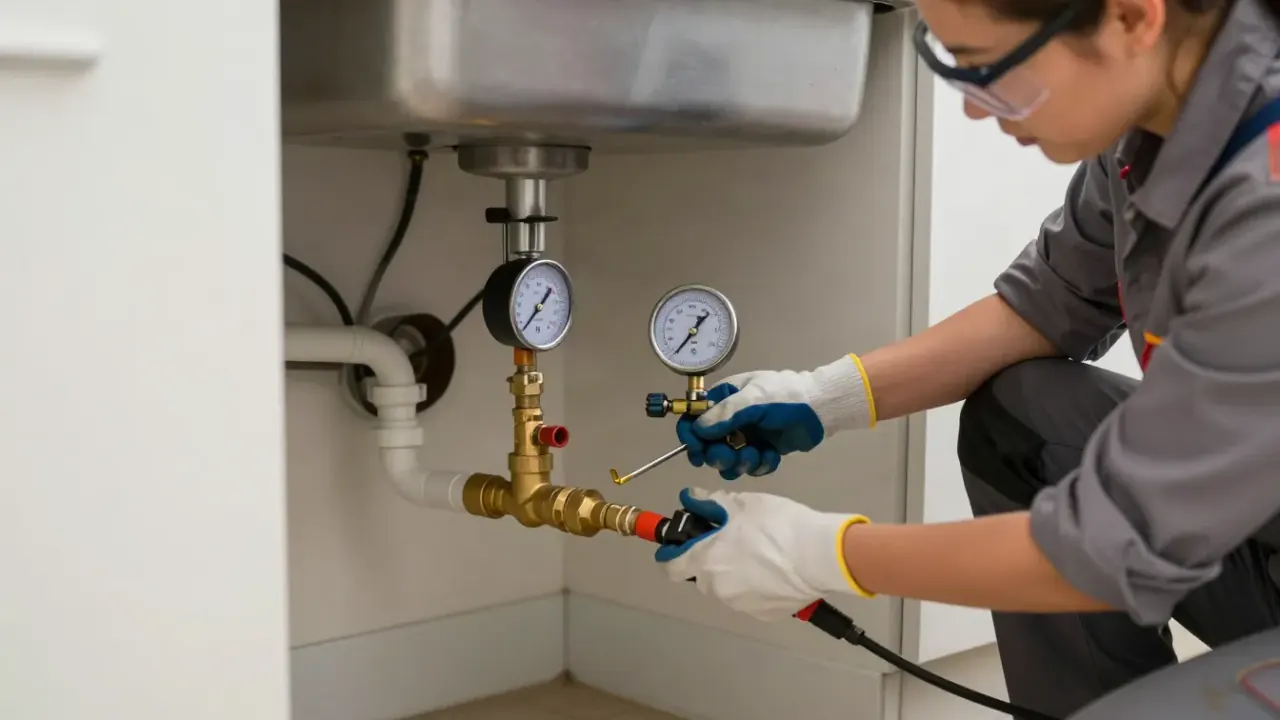
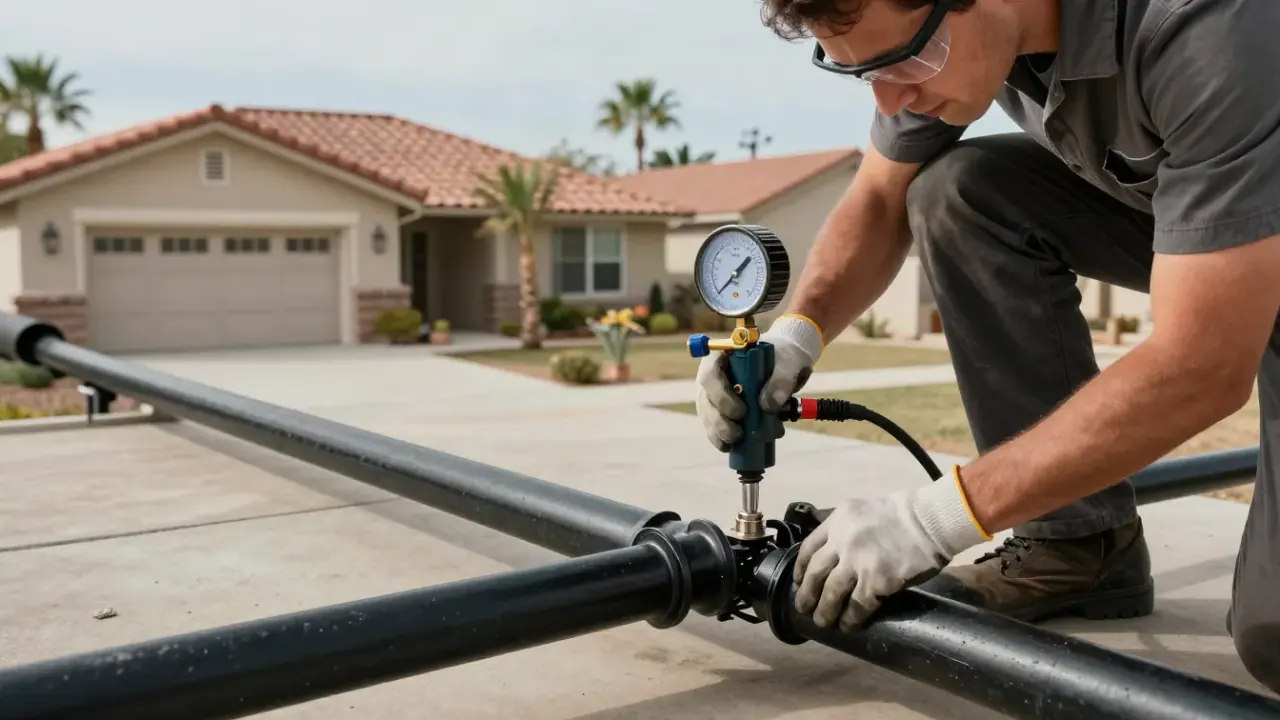
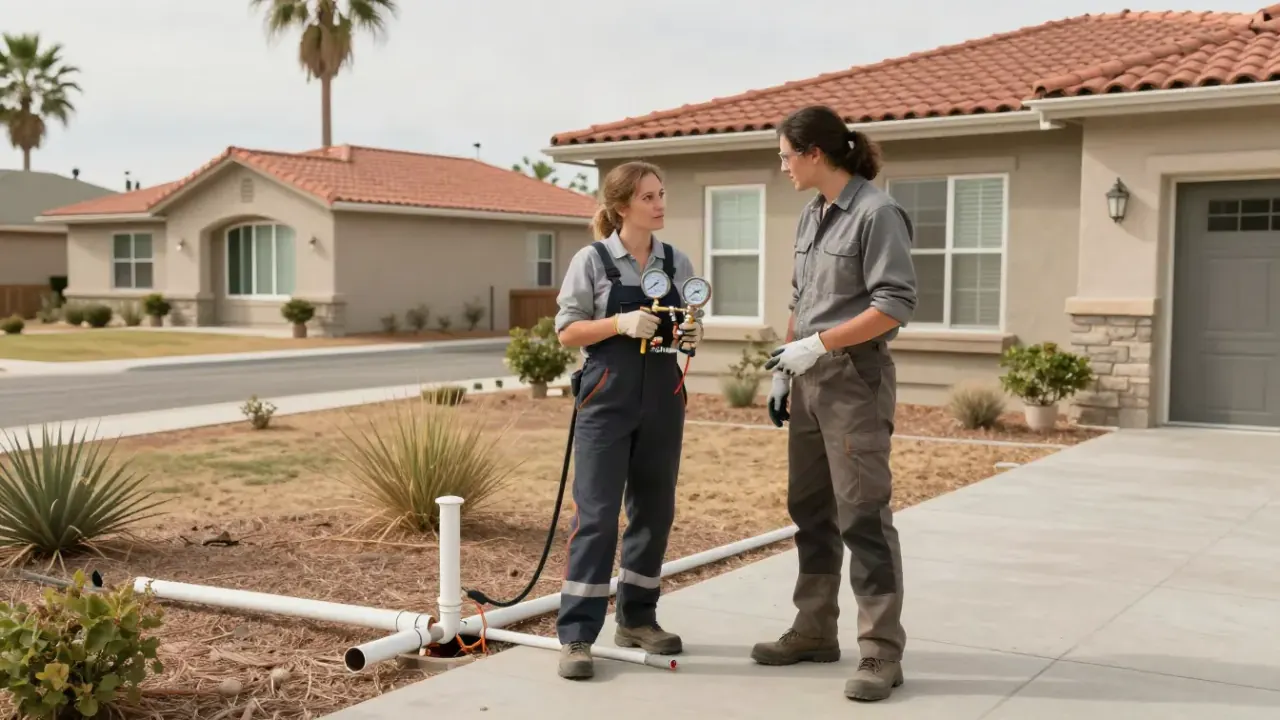
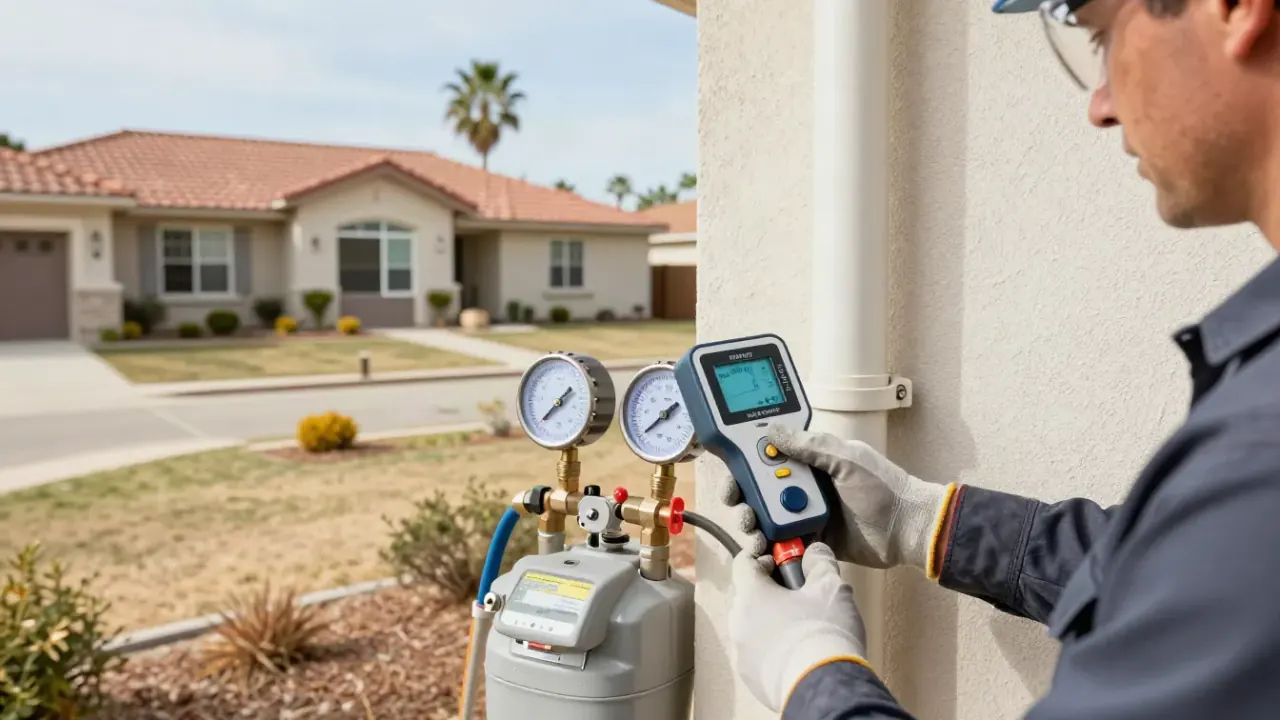
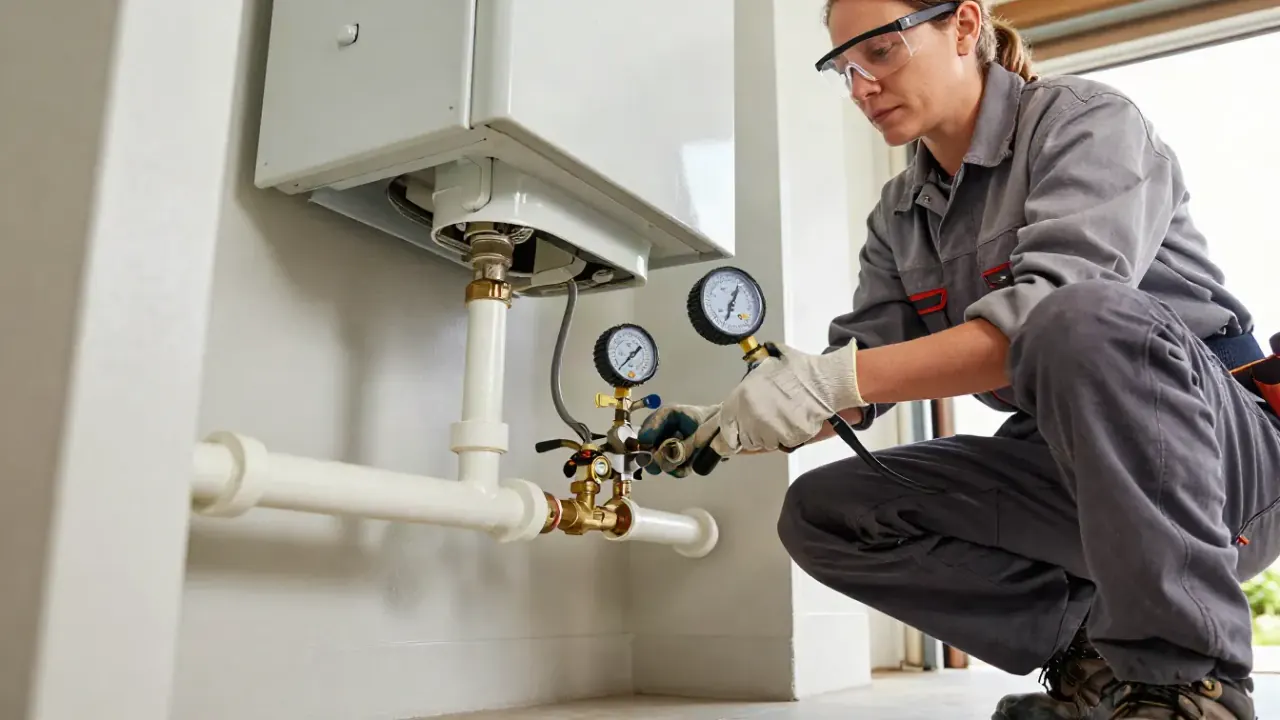
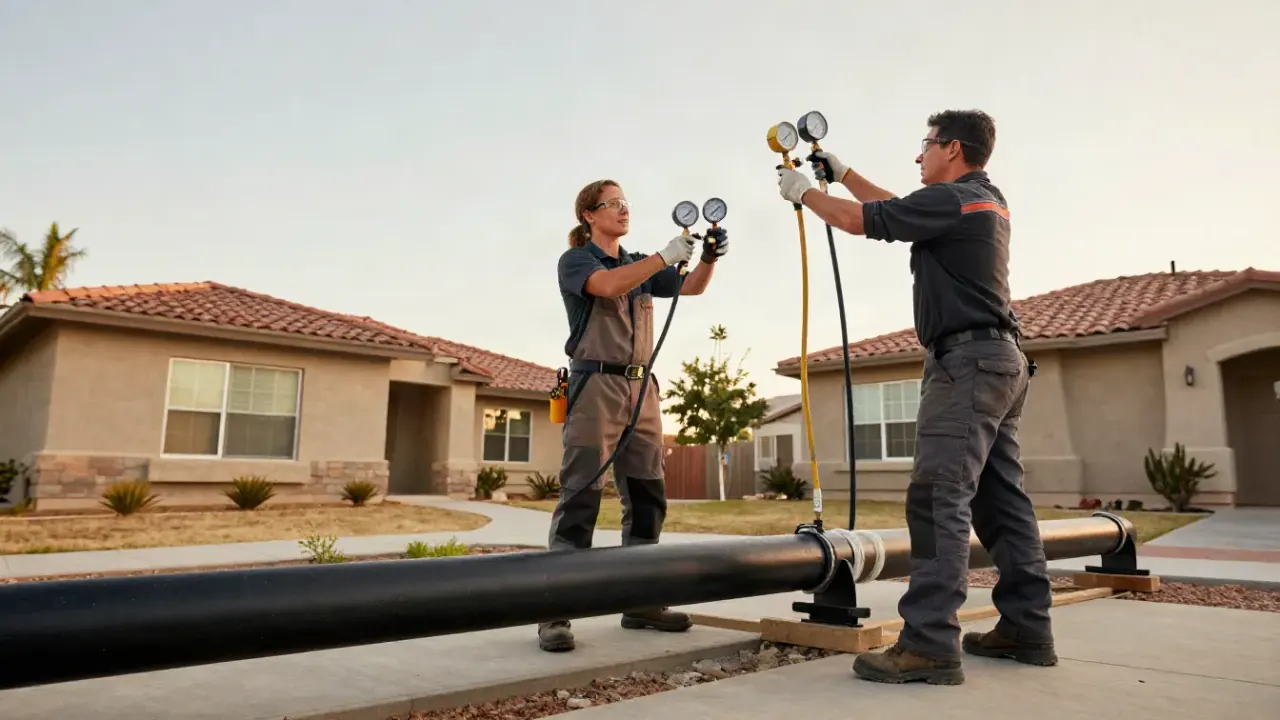
If two or more of those are true at your house, stop using the appliance and get the line tested. We run Gas Line Pressure Testing Fountain Valley CA on every suspected line before we touch a wrench, so we know exactly where the failure is.
Can Corroded Gas Pipes Cause Leaks in Fountain Valley?
Yes - corroded gas pipes are the leading cause of residential gas leaks we repair in Fountain Valley, and the leak almost always starts at a joint, a valve, or a flex connector rather than the middle of a straight run. Those are the spots where two metals meet, where moisture collects, and where the pipe wall is thinnest.
A pinhole leak the size of a pinhead can release enough gas to smell inside a closed garage. A cracked valve body can release far more. The danger is not just the gas itself - it is the accumulation in a closed space, and the ignition risk from a water heater pilot, a furnace, or a garage door opener.
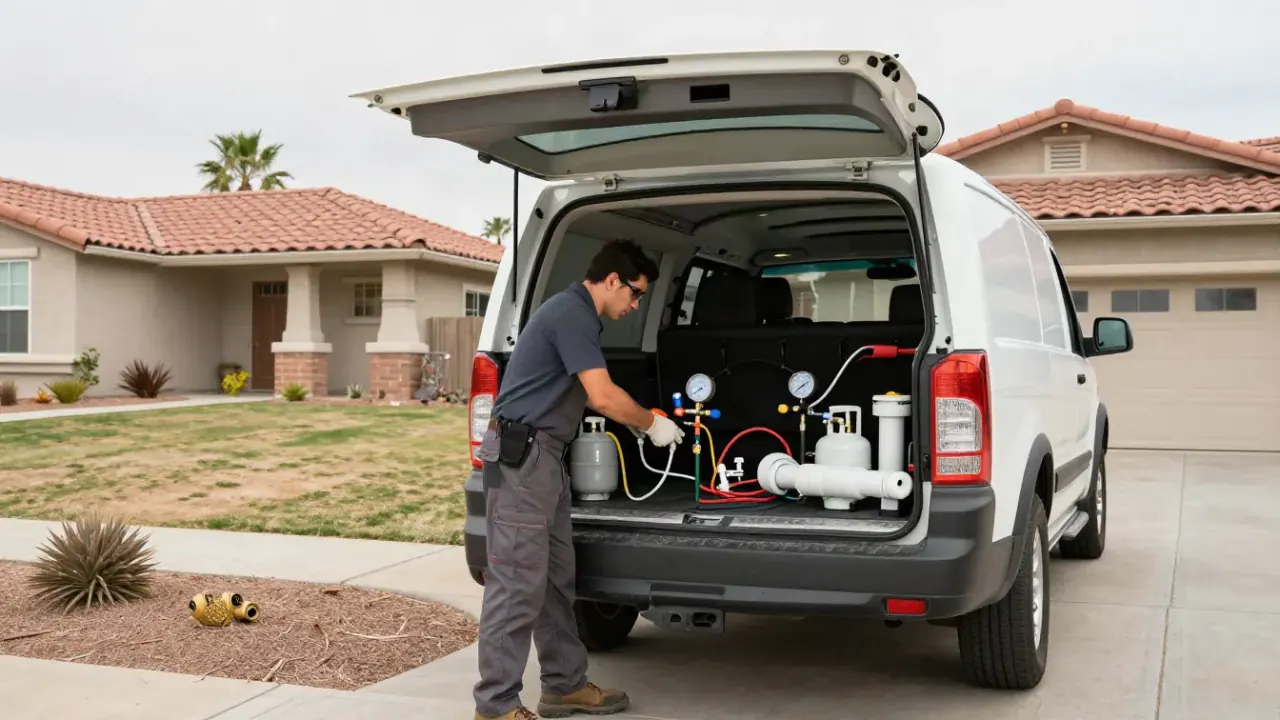
If you smell gas, leave the house, do not flip any switches, and call SoCalGas or 911 from outside. Once the utility has made the area safe, we can find and repair the source. Our Gas Leak Detection and Repair Fountain Valley CA service uses an electronic combustible gas detector plus a soap-and-pressure test to pinpoint the exact fitting, then we replace it with the correct dielectric union so the same joint does not fail again.
What to Watch Out For
The most common mistake we see is homeowners painting over rust instead of replacing the pipe. Paint hides the problem for a season and then flakes off with the rust still underneath. By the time it shows again, the wall is thinner.
Second mistake: replacing a section of pipe with the wrong material. A steel patch joined to copper without a dielectric union will corrode at the joint within two or three years. We have re-done dozens of these across Westmont Gas Line Repair and the surrounding tracts.
Third mistake: ignoring the flex connector. It is the cheapest part of the system and the one most likely to fail. If yours is more than 10 years old, or if it is the older uncoated brass type, replace it. Our Flexible Gas Connector Replacement Fountain Valley CA service covers the connector, the shut-off valve, and the leak test in one visit.
Fourth mistake: burying a corroded line without sleeving it. Direct burial in Fountain Valley soil is a shortcut that costs you the pipe in 15 years instead of 40.
Preventing Gas Pipe Corrosion Fountain Valley CA
Preventing gas pipe corrosion Fountain Valley CA starts with keeping water off the metal. Every exposed gas line in a garage, crawlspace, or exterior wall should be dry, painted with a rust-inhibiting primer, and supported so it does not sit in a puddle.
Here is the maintenance schedule we recommend to our own customers:
- Every 12 months: visual inspection of the meter riser, the appliance connector, and any exposed pipe in the garage or crawlspace. Look for powder, flaking paint, or green/white residue on brass.
- Every 3 to 5 years: pressure test on any line older than 25 years, especially if you have added an appliance or a BBQ.
- Every 10 to 15 years: replace flexible connectors regardless of appearance.
- After any roof leak, slab leak, or plumbing repair: inspect the gas line in the affected area. Water travels along framing and finds the pipe.
If you are adding a new appliance, use the right material from day one. We install coated black steel or CSST with proper bonding and a dielectric union at every transition. That is standard on our Gas Line Installation for Appliances Fountain Valley CA work, and it is why those lines last decades instead of years.
When to Call a Professional
Call a licensed gas contractor the moment you see powder on a pipe, smell gas, or notice a yellow burner flame. Those are not maintenance items - they are active failures.
You should also call us if your home is more than 40 years old and the gas lines have never been inspected, if you are buying or selling a house and the inspection report flagged the gas system, or if you are planning to add a fire pit, pool heater, or outdoor kitchen and need the line sized and permitted correctly.
Fountain Valley Gas Line Repair handles all of it - detection, repair, replacement, and permit coordination with the City of Fountain Valley. We find the leak, fix it, and test the line before we leave. If the pipe needs to come out, we replace it with corrosion-resistant material and document the work for your records.
Frequently Asked Questions
How does corrosion affect gas pipes in Fountain Valley?
Corrosion thins the pipe wall until it can no longer hold pressure, causing pinhole leaks, cracked joints, and eventually full line failure. In Fountain Valley, salt air and damp soil speed the process, so a line that would last 60 years inland may fail in 40 here.
What are the signs of a corroded gas pipe in Fountain Valley CA?
Look for orange or white powder on the pipe, flaking paint, a rotten-egg smell, yellow burner flames, soot on the appliance, or a higher gas bill with no change in use. Any two of those together justify a pressure test.
Can corroded gas pipes cause leaks in Fountain Valley?
Yes. Corroded joints, valves, and flex connectors are the most common leak sources we find in Fountain Valley homes. A pinhole leak can release enough gas to smell inside a closed garage, so treat any odor as an emergency.
How much does corroded gas pipe replacement cost in Fountain Valley?
Typical 2026 pricing in Fountain Valley runs $450 to $1,200 for a single exposed section or flex connector, and $2,500 to $6,500 for a full interior line replacement, depending on length, access, and whether drywall or concrete must be opened. Permit fees and pressure testing are included in our quotes.
How long does gas pipe replacement take?
A single section or connector takes 2 to 4 hours. A full interior line replacement usually runs 1 to 3 days, including the pressure test and inspection. We give you the timeline before we start.
Get Help with Gas Line Repair in Fountain Valley
If you have seen rust, powder, or a yellow flame on any gas line in your home, do not wait for it to become a leak. We inspect, test, and repair gas lines across Fountain Valley and the surrounding neighborhoods, and we tell you straight whether you need a repair or a replacement.
Call Fountain Valley Gas Line Repair at (657) 644-0068 to schedule an inspection or an emergency response.