Signs You May Have a Gas Leak in Your Home
Rotten-egg smell, hissing near gas lines, dead grass patches, and unexplained headaches are the most common signs of a gas leak in Fountain Valley homes. Here is what to check first.
The most common signs of a gas leak in your home in Fountain Valley CA are a rotten-egg or sulfur smell, a hissing sound near a gas line or appliance, dead or discolored grass above buried lines, and physical symptoms like headaches, dizziness, and nausea that ease when you leave the house. Mercaptan, the additive that gives natural gas its distinct odor, is detectable at concentrations as low as 1 part per billion, so if you smell it inside, treat it as a real leak until a professional proves otherwise. This guide walks through the indoor and outdoor warning signs, the symptoms that show up at night, and the mistakes that turn a small leak into a dangerous one.
What Are the Signs of a Gas Leak in Your Fountain Valley Home?
The signs of a gas leak in your home in Fountain Valley CA fall into four categories: smell, sound, sight, and physical symptoms. Smell is the one most people catch first because the mercaptan additive is intentionally pungent. Sound comes next, usually a steady hiss or a faint whistle near a gas appliance or meter. Sight covers visual clues like dead grass, soot around a burner, or a pilot light that keeps going out. Physical symptoms, including headaches and nausea, are the body's reaction to breathing small amounts of gas over hours or days.
Any one of these alone is worth a second look. Two or more together means you should shut off the gas at the meter and call a licensed technician before you sleep in the house again.
The Smell, the Sound, and the Symptoms: Breaking Down the Warning Signs
Gas leak warning signs in Fountain Valley tend to show up in a predictable order, and knowing that order helps you decide how fast to act. Here is what each category looks like in a real home.
The smell: what does a gas leak smell like in Fountain Valley CA?
Natural gas itself is odorless. The rotten-egg smell comes from mercaptan, which SoCalGas injects into the line before it reaches your meter. If you catch that sulfur smell in a bedroom, hallway, or closet, the leak is likely inside the walls or under the floor. If you only smell it near the water heater or furnace, the leak is probably at the connector or the shut-off valve.
One detail most homeowners miss: a faint smell that comes and goes is often a small leak that only vents when the appliance kicks on. Do not write it off as a pilot light. We have found pinhole leaks in copper lines in homes across Downtown Village Gas Line Repair that had been venting for months before anyone called.
The sound: hissing, whistling, or a faint roar
A hiss near a gas valve usually means gas is escaping under pressure. The pitch changes with the size of the leak. A high-pitched whistle points to a small opening; a low roar points to a larger one. If you hear it at the meter, shut the gas off at the main valve before you do anything else.
The symptoms: headaches, nausea, and fatigue
Early gas exposure symptoms look like a mild flu: headache, nausea, dizziness, and a heavy tiredness that does not match your sleep. The tell is that they ease within an hour of leaving the house and return when you come back. Children and pets often show symptoms first because they spend more time low to the floor, where gas pools.
How to Tell If You Have a Gas Leak in Fountain Valley CA
How to tell if you have a gas leak in Fountain Valley CA comes down to three checks you can do in under five minutes without touching a wrench. First, shut off every gas appliance and see if the meter dials keep moving. Second, listen at each gas connection for a hiss. Third, look for soot, scorch marks, or a yellow, lazy flame on the stove instead of a crisp blue one.
- Meter test: Turn off the stove, water heater, furnace, and dryer. Note the position of the two small dials on the meter. Wait 15 minutes. If they moved, gas is escaping somewhere in the house.
- Soapy water test: Mix one teaspoon of dish soap in a cup of water. Brush it on each gas connection. Bubbles that grow mean a leak at that joint.
- Flame test: A healthy gas flame is blue and steady. A yellow or orange flame with soot means the burner is not getting the right air-to-gas mix, which can point to a line or regulator problem.
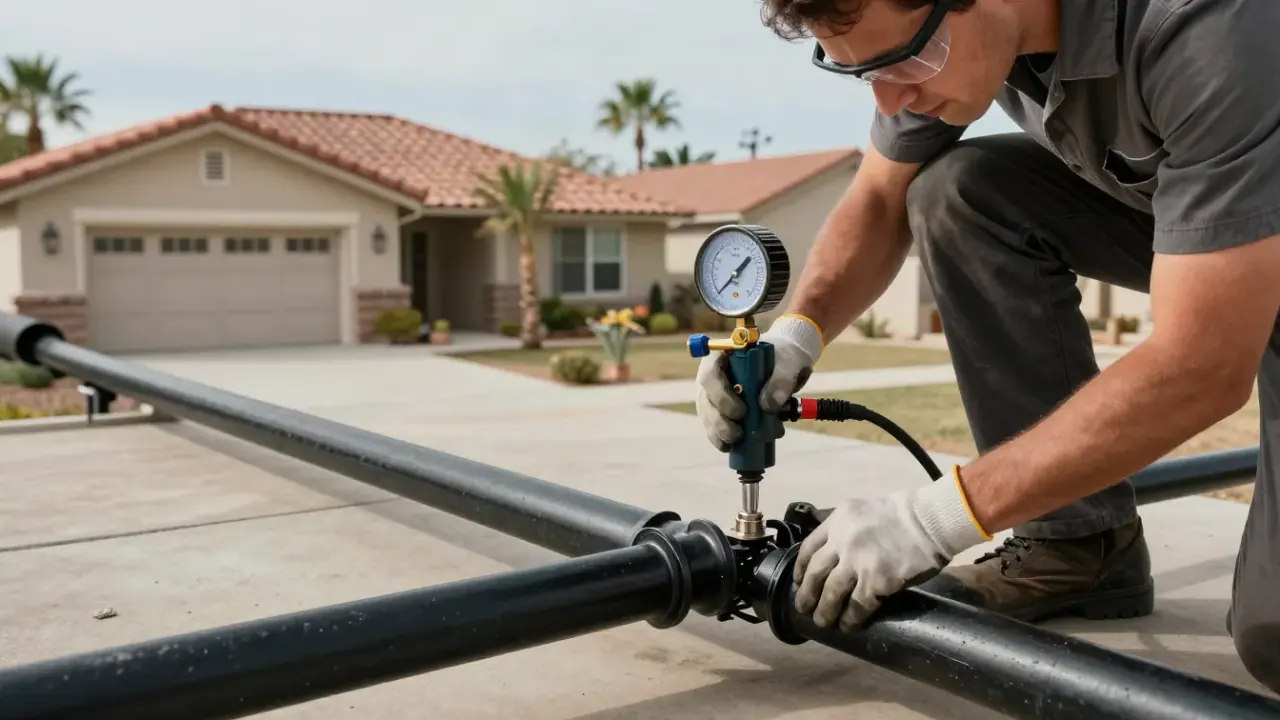
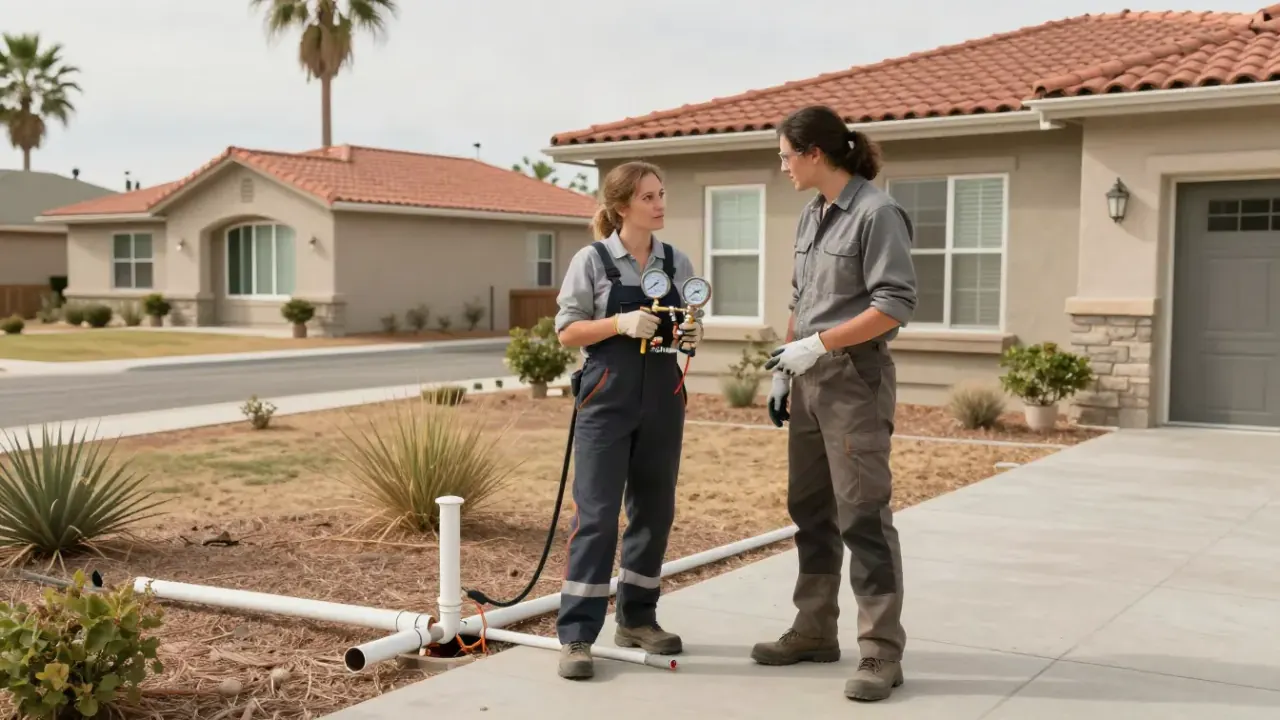
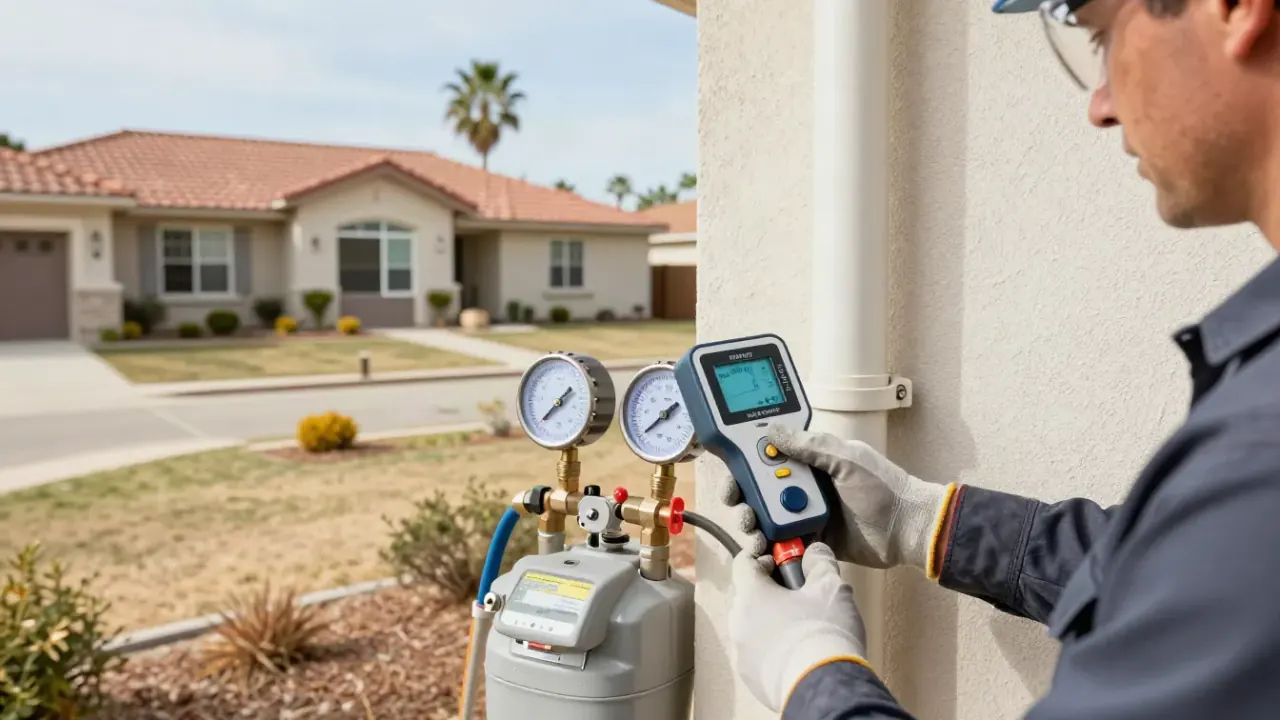
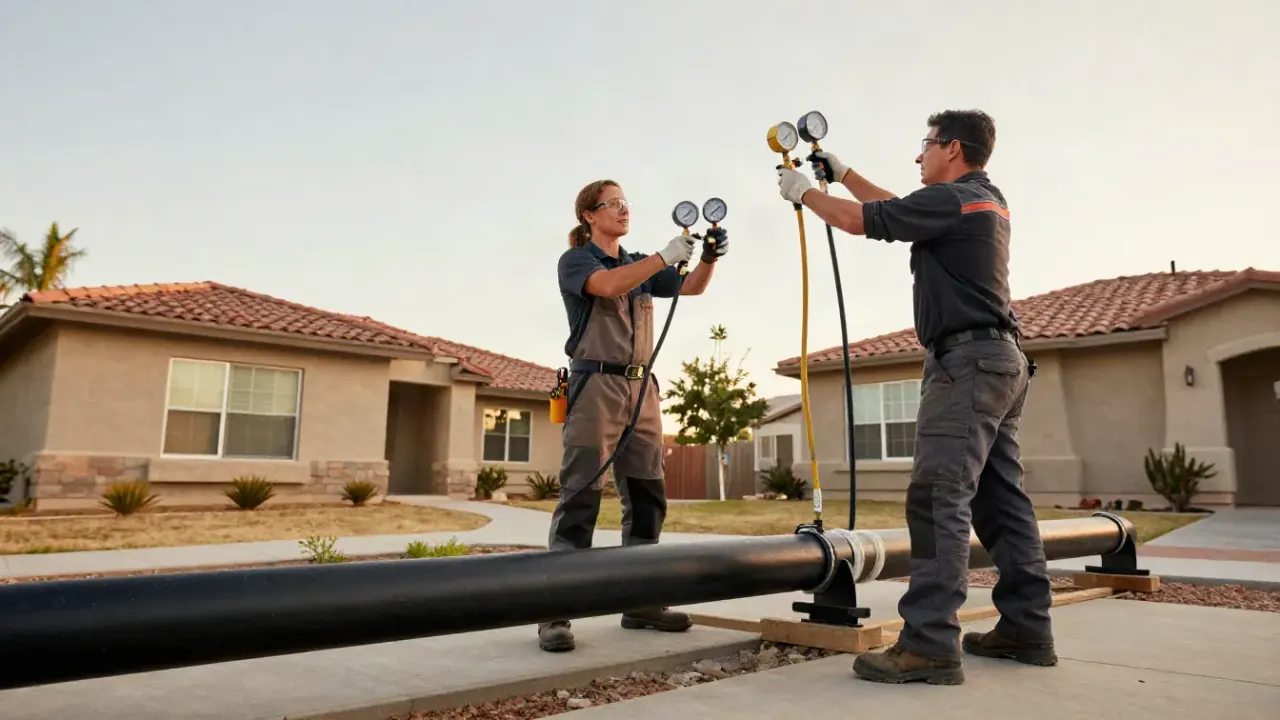
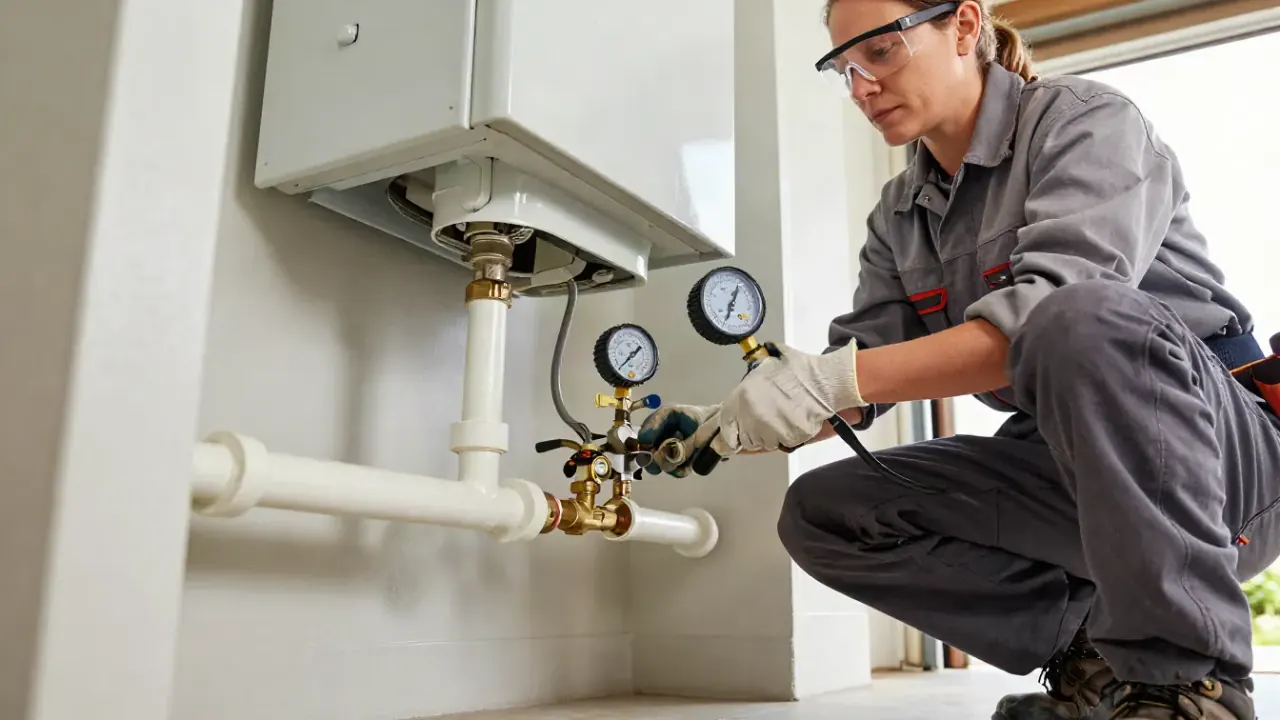
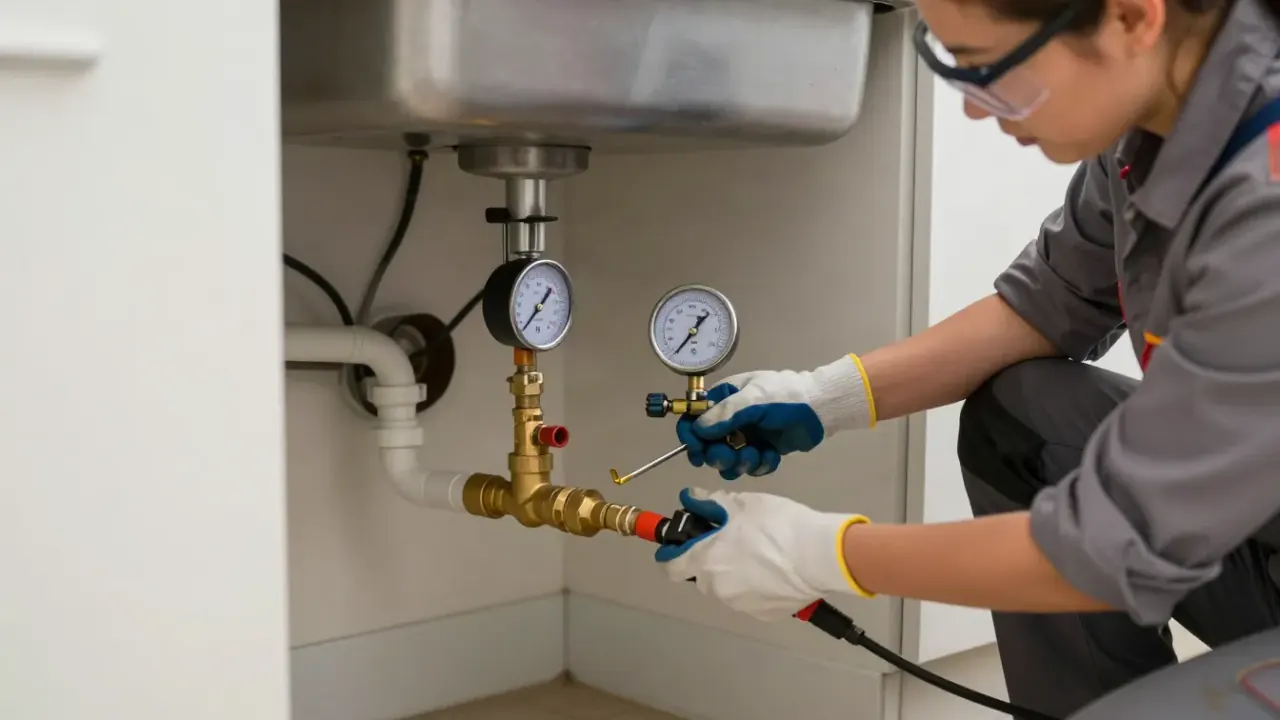
If any of those three checks fail, stop there. Do not tighten fittings yourself. A licensed technician can run a Gas Line Pressure Testing Fountain Valley CA to confirm the leak and pinpoint it before any repair starts.
Gas Leak Symptoms at Night Fountain Valley CA: Why They Get Worse After Dark
Gas leak symptoms at night Fountain Valley CA homeowners describe most often are headaches that wake them up, a metallic taste in the mouth, and a feeling of pressure behind the eyes. There are two reasons night symptoms get worse. First, windows and doors stay closed, so gas accumulates instead of venting. Second, you are lying still for hours, breathing shallowly, which gives the gas more time to build up in your bloodstream.
If you wake up with a headache that fades after you step outside, do not go back to sleep in that room. Open the windows, shut off the gas at the meter, and call for a leak inspection. We run overnight and early-morning calls for exactly this reason, and we test the line before we leave so you know the house is safe to sleep in.
Common Gas Leak Signs in Fountain Valley, California: Outdoor Clues Most Homeowners Miss
Common gas leak signs in Fountain Valley, California often show up in the yard before they show up in the house. A patch of dead or yellowing grass in an otherwise green lawn usually means a buried gas line is leaking under that spot. The gas displaces oxygen in the soil, and the roots die from the bottom up.
Other outdoor clues:
- Dirt or dust blowing up from the ground near the meter or along the line to the house.
- A faint gas smell outside that gets stronger near the meter or the side yard.
- Bubbles in a puddle after rain, especially near the meter or a buried line.
- Dead insects or a patch of bare soil over the line path.
Fountain Valley's older tracts, especially around Mile Square Park Area Gas Line Repair, have galvanized steel and copper lines that were installed 40 to 50 years ago. Those lines corrode from the inside out, and the first sign is often a dead patch in the lawn. If you see one, do not dig. Call for a leak survey first.
What to Watch Out For: Mistakes That Make a Gas Leak Worse
The biggest mistake homeowners make with a suspected gas leak is treating it like a plumbing drip - something to look at tomorrow. Gas is not water. A small leak in a closed garage or utility closet can reach explosive concentrations in a few hours.
Other mistakes we see on service calls:
- Using a lighter or match to check for a leak. Never do this. A soapy water test or a professional pressure test is the only safe way.
- Turning on a light switch or exhaust fan in a room that smells like gas. A spark from a switch can ignite the gas.
- Running a gas appliance to see if the smell goes away. It does not. It adds more gas to the room.
- Tightening a gas fitting with a household wrench. Over-tightening cracks the flare and makes the leak bigger.
- Ignoring a faint smell because it comes and goes. Intermittent smells are often the most dangerous because they lull you into thinking the problem is gone.
If you have already made one of these mistakes and the smell is strong, leave the house and call 911 or SoCalGas from outside. Once the immediate danger is cleared, we can handle the repair.
When to Call a Professional
Call a professional the moment you confirm a leak at the meter, smell gas inside the house, or see two or more warning signs at once. A licensed technician can find the leak, repair or replace the failed section, and pressure-test the line before turning the gas back on. That last step is what separates a real fix from a temporary patch.
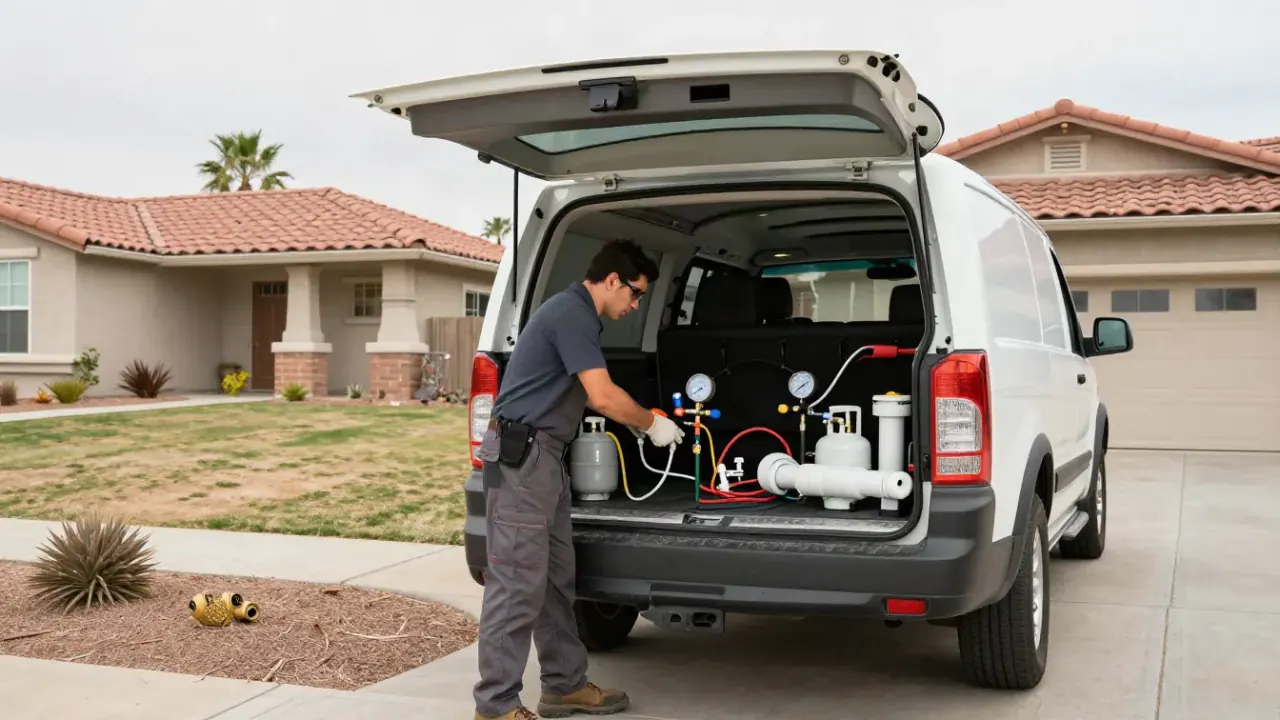
Our team handles Gas Leak Detection and Repair Fountain Valley CA for homes across the city, from single-family houses to small commercial kitchens. We find the leak, fix it, and test the line before we leave. If the line is too corroded to repair, we walk you through replacement options on the spot so you are not guessing at the cost.
Frequently Asked Questions
What are the signs of a gas leak in my Fountain Valley home?
The main signs are a rotten-egg smell, a hissing sound near a gas line, dead grass over buried lines, and symptoms like headaches or nausea that ease when you leave. Two or more together means shut off the gas and call a technician.
How can I tell if I have a gas leak in Fountain Valley?
Run the meter test: turn off every gas appliance, note the meter dials, and wait 15 minutes. If the dials moved, gas is escaping. A soapy water test on each connection will show bubbles at the leak point.
What does a gas leak smell like in Fountain Valley CA?
It smells like rotten eggs or sulfur. That odor comes from mercaptan, which SoCalGas adds to natural gas so leaks are detectable. If you smell it inside, treat it as a real leak until a professional confirms otherwise.
Can I detect a gas leak myself in Fountain Valley?
You can catch the smell, hear a hiss, and run the meter and soapy water tests. You cannot safely pinpoint a leak inside a wall or under a slab. That takes a pressure test and a leak detector, which is what we bring on every call.
Do gas leaks get worse at night?
Yes. Closed windows and doors trap gas indoors, and lying still for hours gives your body more time to absorb it. Nighttime headaches that fade when you go outside are a strong signal to call for an inspection.
Get Help with Gas Line Repair in Fountain Valley
If you smell gas, hear a hiss, or see dead grass over a buried line, do not wait for it to get worse. We handle Gas Line Repair Fountain Valley CA with same-day leak detection, upfront pricing, and a pressure test before we leave.
Call (657) 644-0068 and we will get a technician to your door today.