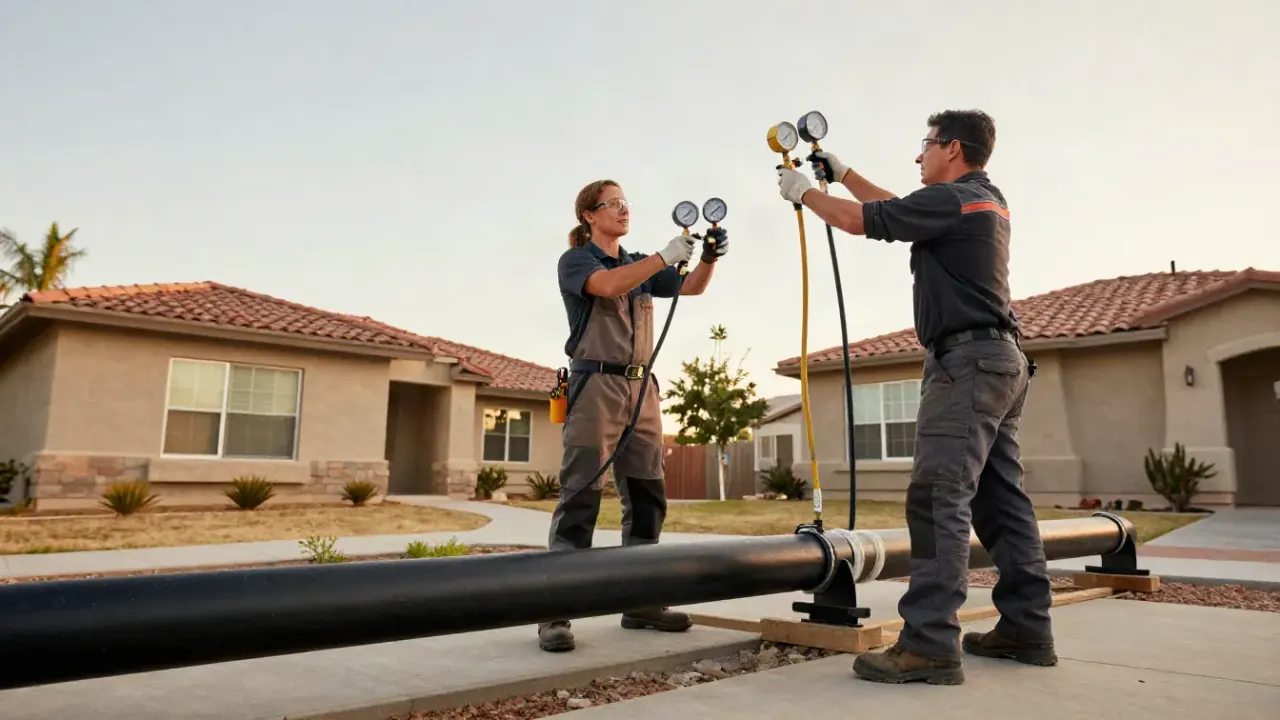
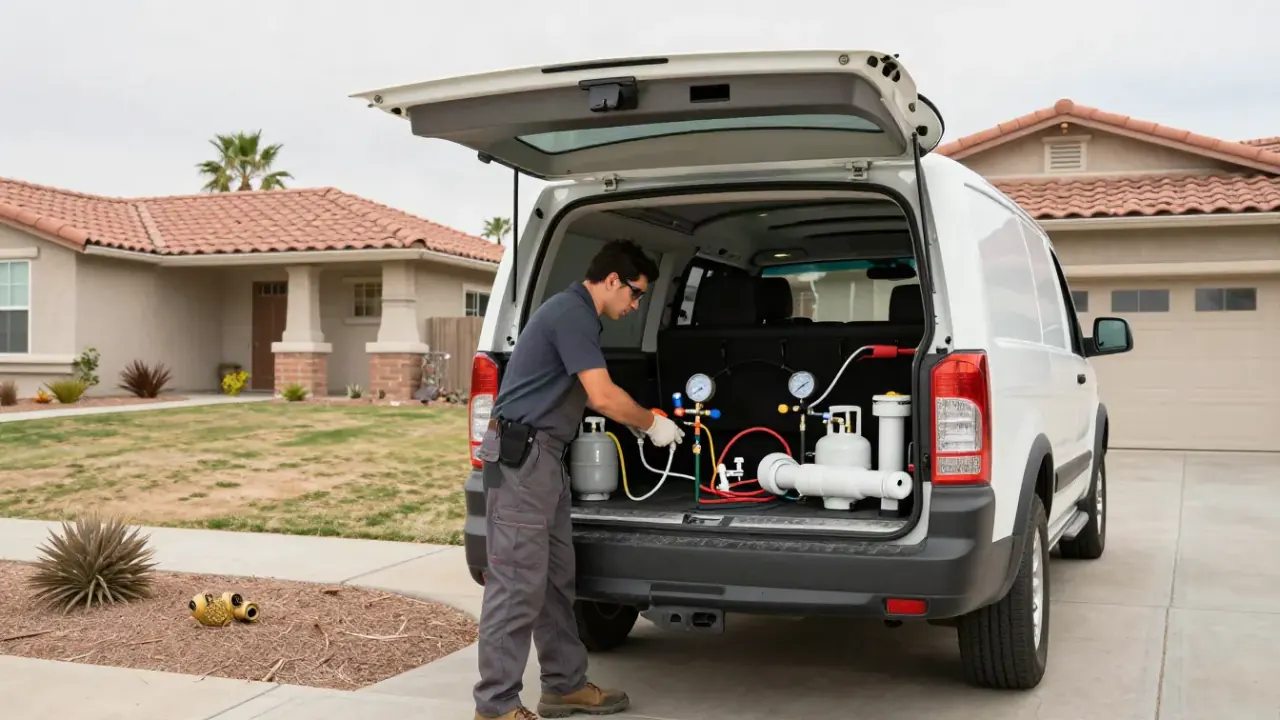
How Gas Line Pressure Testing Works
Gas line pressure testing works by sealing the line, pumping it with air or nitrogen, and watching a gauge for pressure loss. Here is the full Fountain Valley process.
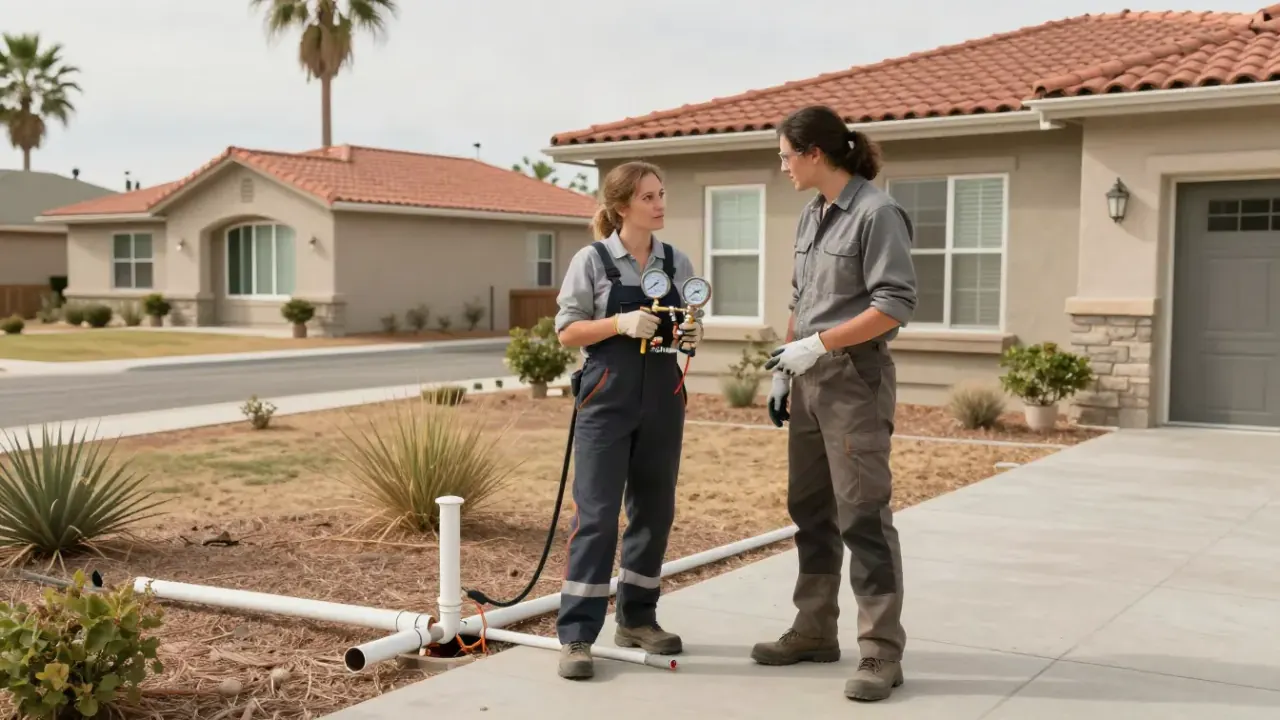
Gas line pressure testing works by isolating a section of gas piping, filling it with compressed air or nitrogen, and watching a calibrated gauge to see whether the pressure holds. If the gauge drops over the test window, there is a leak somewhere in that line. That is the whole idea in two sentences, and it is the same method our technicians use on every gas line we touch in Fountain Valley, California.
The rest of this post walks through the actual gas line pressure testing process Fountain Valley homeowners see when we test a kitchen line, a pool heater run, or a whole-house system after a repair. You will get the PSI numbers, the time windows, the tools, and the mistakes that cause false failures.
How Gas Line Pressure Testing Works in Fountain Valley CA
Gas line pressure testing is a diagnostic procedure that pressurizes a sealed gas pipe with air or nitrogen and measures whether that pressure holds steady over a set period. It is used any time a gas line is new, repaired, relocated, or suspected of leaking.
The reason we pressurize with air instead of gas is simple: you cannot safely hunt for a leak in a pipe that is full of natural gas. Air and nitrogen are inert, cheap, and they behave predictably on a gauge. Once the line is isolated and capped, the test medium does the same job gas would do - it escapes through any crack, bad flare, or loose fitting - without the risk.
Every pressure test has four moving parts:
- Isolation - the gas supply is shut off and the section under test is separated from the meter and from appliances.
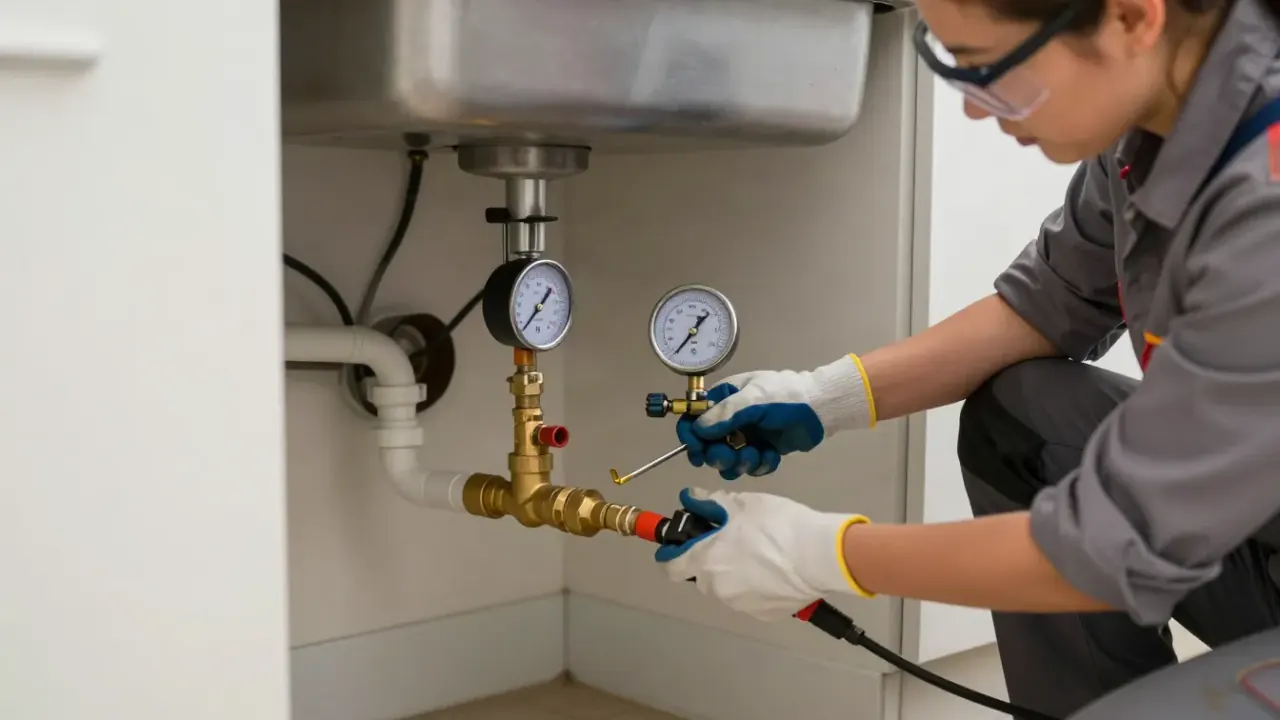
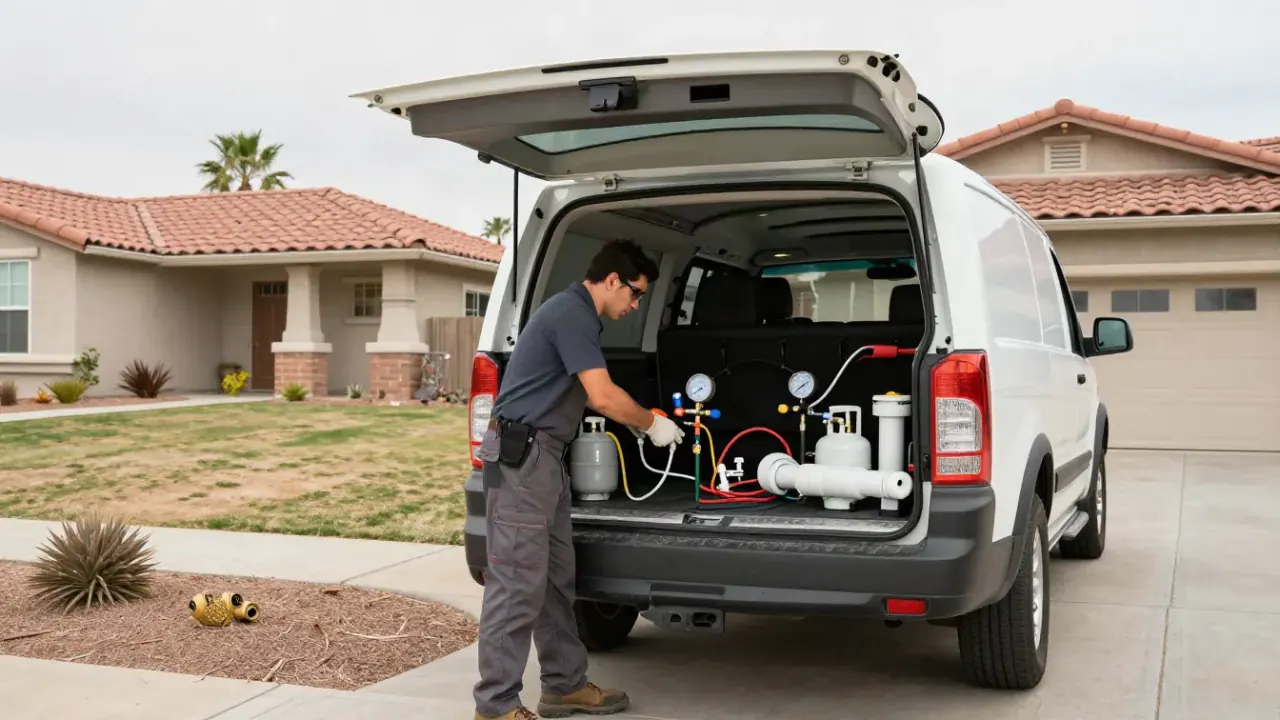
- Pressurization - a hand pump or regulated nitrogen tank raises the line to the target PSI.
- Stabilization - the line sits for a few minutes so temperature and fitting settle.
- Observation - the gauge is read at the start and end of the test window, and any drop is measured.
If you have ever watched a technician pump a bike tire and then stare at the gauge for 15 minutes, you already understand the concept. The difference is that a gas line has to hold that pressure with zero loss, not just "close enough."
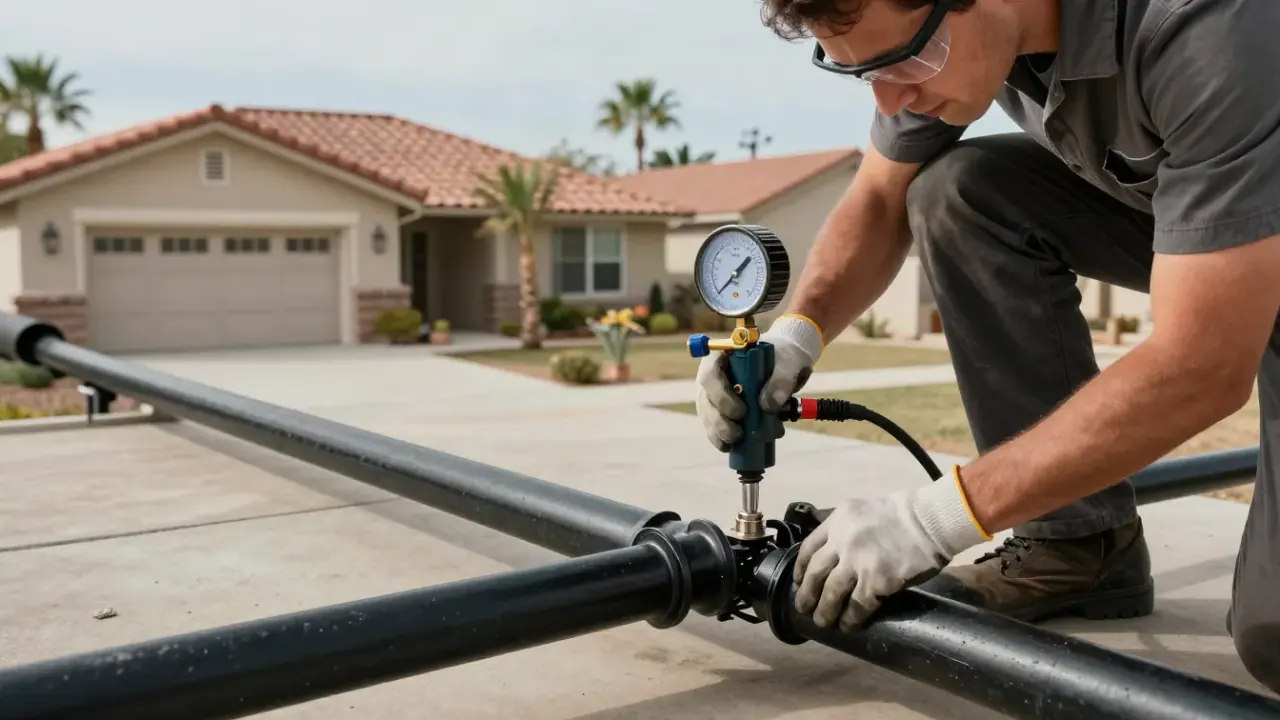
For most Fountain Valley homes, the line under test is one of three things: a single appliance run, a branch serving an outdoor kitchen or fire pit, or the entire house system after a major repair. The test method is the same; the volume of pipe and the number of fittings change how long it takes. If you are weighing a repair against a full replacement, our page on gas line replacement Fountain Valley covers when each one makes sense.
The Gas Line Pressure Testing Process, Step by Step
The gas line pressure test steps Fountain Valley CA homeowners see on a typical job run in a fixed order, and skipping any one of them is how false results happen.
Step 1: Shut off the gas and lock it out
We close the meter valve and the appliance shut-off, then tag the valve so nobody opens it mid-test. On a house built in the 1960s or 1970s - and there are plenty of those in the older tracts near Downtown Village Gas Line Repair - the shut-off valve itself sometimes fails to seal, and we replace it before testing. A leaking valve will look exactly like a leaking pipe on the gauge.
Step 2: Isolate the section under test
We cap or plug every open end. Appliances come off the line, and any flex connector is either removed or replaced. Flexible connectors are a common failure point, and we often swap them during the same visit - the details are on our gas flex line replacement Fountain Valley CA page.
Step 3: Connect the test gauge and pump
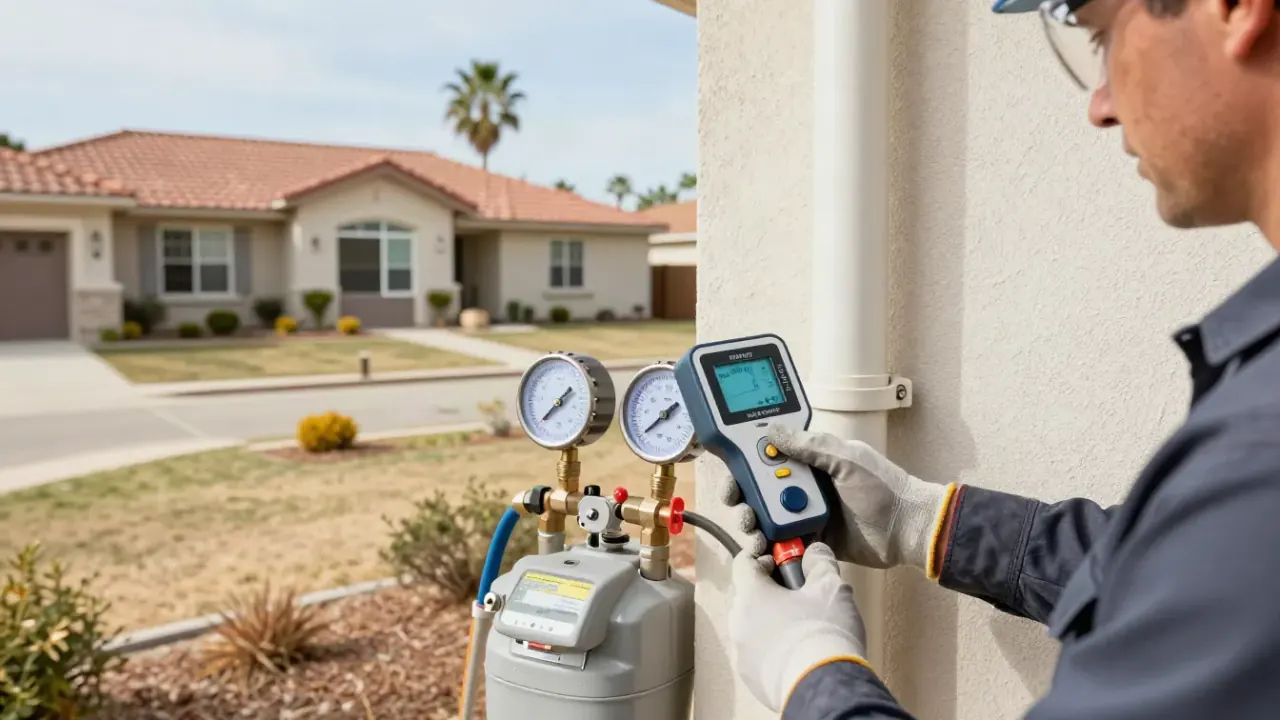
A calibrated 0-15 PSI or 0-30 PSI gauge goes on the test tee, and we pump the line up to the target pressure. We note the starting reading, the ambient temperature, and the time.
Step 4: Stabilize, then observe
The line sits for 3-5 minutes so the air temperature equalizes with the pipe. Then the real test window starts. We read the gauge at the end and compare.
Step 5: Find and fix any leak
If the gauge dropped, we go hunting. Soap bubbles on every joint, a combustible gas detector along the run, and sometimes a second isolated test on just one branch. Once we find it, we repair and re-test from step 3.
Step 6: Document and restore
We record the final reading, the duration, and the result. Then the gas goes back on, appliances are reconnected, and we light every pilot to confirm the system works. If the job needs a city inspection, our gas line permit service Fountain Valley CA team handles the paperwork and the walkthrough.
What PSI Is Used for Gas Line Pressure Testing in Fountain Valley CA?
Residential gas line pressure testing in Fountain Valley CA typically uses 10 PSI for a standard 15-minute test, or 3 PSI for a longer 30-minute test on existing systems. The number depends on what is being tested and who is signing off.
Here is how the ranges break down in practice:
- 3 PSI for 30 minutes - common on existing residential lines where the goal is confirming no leak, not proving new construction strength.
- 10 PSI for 15 minutes - used on new or heavily modified runs, and the number most inspectors in Orange County expect to see on a new install.
- Up to 60 PSI - reserved for specific commercial or high-pressure applications, and never used on a typical home appliance line.
The gauge itself matters as much as the number. A 0-100 PSI gauge cannot show you a 0.5 PSI drop. We use a low-range gauge so a small leak is visible instead of hidden in the needle's thickness. That single choice is the difference between passing a test and missing a slow leak that shows up as a gas smell three weeks later.
Natural gas delivered to a Fountain Valley home runs at roughly 0.25 PSI - about 7 inches of water column - so a 10 PSI test is 40 times the working pressure. That is deliberate. A line that holds 40 times its normal pressure will absolutely hold at operating pressure.
How Long Does a Gas Pressure Test Take in Fountain Valley?
A gas pressure test takes 15 to 30 minutes of gauge-watching time, but the full appointment usually runs 1 to 3 hours once you add isolation, leak-finding, and reconnection. The gauge window is short; the prep is not.
What stretches the clock:
- Number of appliances. A single BBQ line is quick. A whole-house test with a range, furnace, water heater, dryer, and pool heater takes longer to isolate and restore.
- Leak found. Every failed test adds a hunt-and-repair cycle, then a fresh 15-30 minute test.
- Access. Lines buried behind drywall, under a slab, or in a tight attic chase add time.
- Valve condition. A shut-off valve that will not seal has to be replaced before the test means anything.
If you are scheduling around a real estate transaction, plan on a half-day window. If it is a simple post-repair verification, an hour is realistic. We tell you which one you are getting before we start, and the price is quoted upfront.
Why Gas Line Pressure Testing Is Important in Fountain Valley CA
Gas line pressure testing is important in Fountain Valley CA because it is the only reliable way to confirm a gas line is leak-free before gas is turned back on. A smell test or a soap-bubble check on visible joints will not catch a pinhole leak inside a wall.
Three local reasons this matters more than people assume:
Housing age. A large share of Fountain Valley's housing stock went up between the late 1950s and the 1980s. Black steel pipe from that era develops pinhole leaks from the inside out, especially in coastal-influenced humidity. You cannot see that corrosion from the outside. Our rusty gas pipe replacement Fountain Valley CA work exists because of it.
Seismic activity. Southern California moves. A small shift can stress a fitting or crack a flare without any visible damage. A pressure test is how you find that before it becomes a gas smell in the garage.
Real estate and permitting. Gas line inspections are routine during Fountain Valley home sales, and the city requires a passing pressure test on permitted gas work. No passing test, no sign-off.
The stakes are straightforward. Natural gas ignites at concentrations between roughly 5% and 15% in air. A leak that a gauge catches in 15 minutes is a leak that could otherwise sit in a wall cavity for months. If you ever smell gas, that is a different call - get everyone out and call the utility first, then call us for gas leak repair Fountain Valley.
Common Mistakes We See During Gas Line Leak Tests
Most failed gas line leak tests we get called to re-run were not real leaks. They were test errors. Here are the ones that show up over and over.
- Testing with appliances still connected. A furnace or water heater with a pilotless ignition valve can bleed a tiny amount of air and drop the gauge. Isolate first.
- Using the wrong gauge range. A 0-100 PSI gauge hides small drops. Use a low-range gauge.
- Skipping the stabilization wait. Air heats up as it is compressed. If you start the clock immediately, the pressure drop you see is just the air cooling, not a leak.
- Testing in direct sun. A line running across a hot driveway or roof can gain pressure from heat and mask a real leak. Shade the gauge or test early.
- Forgetting the valve. A shut-off valve that does not seal will fail the test every time. Replace it first.
- Not re-testing after a repair. Every fix gets a fresh full-duration test. No exceptions.
If a contractor tells you the line "passed" after a 5-minute test at 3 PSI with the appliances still hooked up, that is not a test. That is a guess.
When to Call a Professional
Call a professional any time gas work involves opening a line, adding an appliance, or chasing a suspected leak. Gas piping is not a DIY category - a mistake here is not a leaky faucet, it is an explosion risk.
Specific triggers we want you to call us for:
- You smell gas anywhere in or around the house.
- A pressure test failed and you need the leak found.
- You are adding a gas range, dryer, or tankless water heater.
- You are building an outdoor kitchen, fire pit, or pool heater run.
- You are buying or selling a Fountain Valley home and need a test on record.
- A shut-off valve is stiff, stuck, or will not fully close.
Fountain Valley Gas Line Repair runs pressure tests daily across the city and the surrounding neighborhoods. We isolate, test, find the leak, fix it, and re-test before we leave. You get the gauge readings in writing and a system that is actually safe to turn back on.
Frequently Asked Questions
How does gas line pressure testing work in Fountain Valley?
We shut off the gas, isolate the section under test, fill it with air or nitrogen to a set PSI, and watch a calibrated gauge for 15-30 minutes. Any pressure drop means a leak. We then locate it, repair it, and re-test the line before restoring gas service.
What PSI is used for gas line pressure testing in Fountain Valley CA?
Most residential tests run at 10 PSI for 15 minutes or 3 PSI for 30 minutes. New installs and city inspections typically want the 10 PSI / 15-minute standard. Commercial lines can go higher, but a typical Fountain Valley home never sees more than 10 PSI on a test.
How long does a gas pressure test take in Fountain Valley?
The gauge window is 15-30 minutes. The full appointment usually runs 1-3 hours once you include isolating appliances, hunting any leak, repairing it, and reconnecting everything. A simple post-repair verification can finish in about an hour.
Why do I need a gas line pressure test in Fountain Valley?
It is the only reliable way to prove a gas line is leak-free before gas is turned back on. Fountain Valley's older housing stock, seismic movement, and city permitting all make it a routine requirement after any repair, new install, or home sale.
Can I pressure test my own gas line?
No. Gas piping work in California requires a licensed contractor, and a failed test on a DIY repair is a real safety risk. We handle the test, the repair, and any permit coordination in one visit.
Get Help with Gas Line Repair in Fountain Valley
If you need a gas line pressure test, a leak found, or a repair verified, our team is ready to help. We test, fix, and re-test the same day in most cases, with upfront pricing before we start.
Call Fountain Valley Gas Line Repair at (657) 644-0068 to schedule your pressure test or gas line repair.